
Today’s users are getting used to tools that book flights, negotiate refunds, and organize schedules without any micromanaging. Agentic interfaces—software that acts on your behalf—are becoming the standard for complex workflows.
The industry is moving fast. Our found that twice as many teams built agentic products in 2025 compared to the year before. But while the tech is ready, the execution is often getting too much of the wrong kind of attention. “Everyone is building a prompt box,” warns McDonald, “and this is starting to feel like a trend that will live fast and die hard as newer and more engaging patterns emerge.”
Instead, we’re entering what he calls a “renaissance era of AI-inspired UX,” where “people crave the ability to interact with AI abstracted behind a beautiful interface that feels intuitive and inviting.” The focus is on transparent interactions built directly into the product’s design.
Desktop-class Web apps
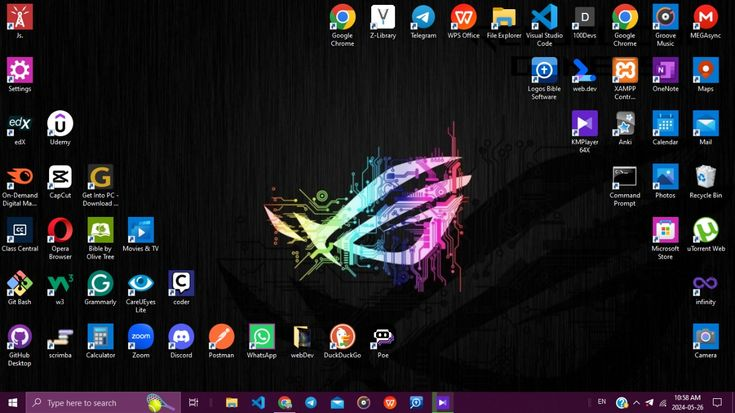
The line between a website and a desktop app is blurring. Thanks to technologies like WebAssembly, you can now run heavy-duty software, like video editors and 3D design tools, right inside a tab. It feels just as snappy as a native app, without the massive download.
This capability opens up a new tier of You can build rich, complex interfaces that feel instant. The performance limits that once held the Web back are disappearing.
Motion UI
Captivate users with subtle and interactive animations. Motion UI is poised to become a cornerstone of web design in 2026, adding a layer of engagement and dynamism to user interfaces.
Forget static sites, this year is about interfaces that move, react, and tell a story.
Thoughtful animations help guide user attention, communicate changes, and improve UX by creating smoother transitions between states. Expect micro-interactions (like button hovers, loading indicators, and scroll-triggered effects) to become more nuanced and purposeful.
With libraries like Framer Motion, GSAP, and native CSS animations evolving fast, developers can now animate without sacrificing performance. The key is balance – too much motion overwhelms, too little underwhelms.
Used wisely, Motion UI keeps users engaged and makes your digital experience feel alive.
Mobile-First Design
With mobile users mobile-first design remains paramount. Focus on responsive and adaptive designs that ensure flawless user experiences across all screen sizes.
Over 60% of global web traffic now comes from mobile devices, and users expect fast, frictionless experiences.
That means performance matters: lightweight code, optimized images, and mobile-friendly navigation should be baked in from the start.
Google’s Core Web Vitals and mobile-first indexing prioritize sites that load fast and feel great on smaller screens. Use fluid grids, scalable typography, and intuitive touch interactions to meet users where they are – on the go.
Mobile-first isn’t about shrinking your desktop site anymore, it’s about designing for real life, in the palm of your user’s hand.
What is Web Development Trends
A web development trend is any change in the tools, technologies, or methods with which developers create websites and apps.
There are trends which are bright and temporary. Others are made into the new standard. The thing is to be able to tell which is which.The trends of 2026 that will matter will be the ones that will address real issues:
- Bounced users due to slow page loading.
- Companies that lose customers due to their application not functioning on mobile.
- Firms that were hacked due to poor security considerations.
- Groups of people taking months to develop functions that can be recreated by AI in a matter of hours.
Learning these trends does not imply that you should apply all of them. It implies that you can get smarter in how your online investment is used — and what sort of web presence is going to deliver.
Agentic AI and Autonomous Agents
With the start of 2026, the phrase “AI assistant” will sound outdated. The new reality is agentic AI, systems that can reason, plan, and act on their own.
The Shift AI is evolving from copilots that support humans to autonomous agents that handle end-to-end workflows. According to Research Nester, the autonomous AI market is projected to hit USD 11.79 billion by 2026, growing at a CAGR above 40 percent through 2035. This marks one of the latest technology trends redefining enterprise workflows, blending automation, reasoning, and adaptability.
The Payoff Companies deploying agentic systems, report faster decisions, reduced manual errors, and continuous optimization at a scale humans alone cannot match.
The Opportunity Agentic AI will open up new roles for professionals who can design, monitor, and scale these intelligent agents. Success will depend on understanding how to guide AI behavior, ensure ethical use, and align outcomes with business goals.
5. Human-AI Collaboration Tools
Human-AI collaboration will evolve significantly in 2026 as AI tools become active contributors in creative, analytical, and operational workflows. Instead of simply assisting, AI will begin to work alongside teams as a collaborative partner with its own reasoning capabilities.
The Shift AI systems will integrate more deeply into workplace tools, providing contextual suggestions, generating ideas, evaluating options, and completing tasks with minimal prompting. These systems will adapt to user preferences, learn individual work styles, and deliver support that aligns with long-term goals. Collaboration will move beyond simple commands and become more conversational and dynamic.
The Payoff Teams will experience greater efficiency, reduced cognitive load, and higher-quality output. Creative work will become faster, analytical work will become more precise, and operational work will become more automated. Human talent will be able to focus on strategy, problem-solving, and innovation rather than repetitive tasks.
The Opportunity Professionals who learn how to co-create with AI will have a major advantage. Skills such as prompt crafting, workflow shaping, and collaborative system design will define the future workplace. Understanding how to guide AI thinking and integrate it into daily processes will become essential for productivity.
Robots are coming

Humanoid robots will move beyond being a laboratory promise—or so predicts Lei Jun, CEO of Xiaomi, who expects them to begin replacing many human-held positions. Hospitals, factories, and logistics centers will start accelerating adoption. Once again, China will be the place to see them operating at their full potential.
AI will conquer space
Space offers superior thermal and energy conditions, making it an ideal location for data centers. The recent collaboration between Nvidia and StarCloud, which resulted in the first AI model trained in orbit, has already demonstrated that this is feasible. Launching rockets remains costly, but if costs continue to fall, new projects will emerge in 2026. Space will become a new computational frontier.
Hyperloop will take off in China

While countries such as the US and the United Arab Emirates have abandoned the project, China is pushing ahead with the goal of developing a train capable of traveling at over 1,000 km/h. Connecting major cities at such speeds will redefine entire regions and significantly enhance their capacity to compete and innovate.
Cybersecurity Advancements
As cyber threats evolve, so do our defenses. Advanced security protocols will be a top priority in web development to protect user data and maintain
Cyberattacks are getting smarter, and so should your site.
In 2026, web developers need to think beyond SSL certificates and basic firewalls. Expect widespread adoption of zero trust architecture, multi-factor authentication (MFA), and biometric logins to become baseline security practices.
Encryption will extend to data in use – not just data at rest or in transit. Developers should integrate automated vulnerability scanning and secure coding tools into CI/CD pipelines to catch issues before deployment.
And don’t forget compliance! Privacy laws like GDPR, CCPA, and new AI-related regulations will shape how we handle data. Bottom line: if it’s online, it needs to be secure by design.